


Identify the claim before judging it
Begin by understanding the claim a biblical passage makes, then examine whether that claim deserves belief. Fair reading lets the speaker, setting and kind of writing determine what is being asserted; otherwise a criticism may refute something the passage never says. Christians connect Jesus' welcome, self-giving and forgiveness as God's restoring action; the Bible presents that account through narratives, laws, prayers, prophecy and letters. Reading those forms in context makes that account intelligible without granting it divine authority in advance. A passage from Luke will show how this works, before we trace the wider Christian claim it belongs to.
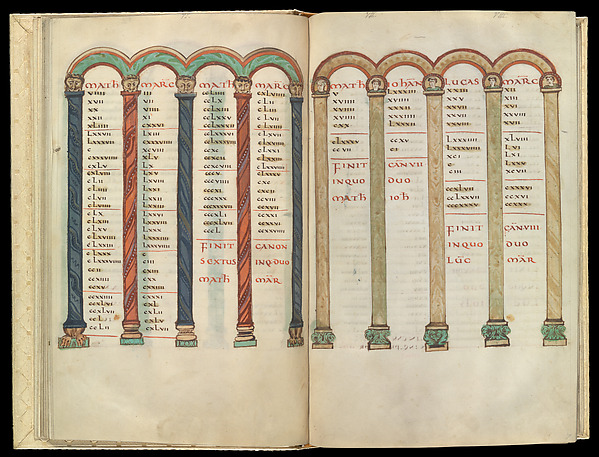
The Bible brings together writings from many generations, from Israel’s scriptures to the first Christian communities; it is not one uninterrupted speech by one human author. The Old Testament contains Israel's scriptures: accounts of creation and Israel's history, laws, prayers, wisdom and prophetic speech. The New Testament contains four Gospels, Acts, letters and Revelation. Its four Gospels are named Matthew, Mark, Luke and John. They narrate and interpret Jesus' ministry, death and resurrection; they are not presented as four books dictated by Jesus. The word “gospel” also names the good news proclaimed about him, so context determines whether someone means the message or a particular written account.
For a Muslim reader, religious permission is a separate question from reading technique. Ibn Baz, quoted in IslamQA 128850, restricts ordinary Muslims’ reading of other scriptures while allowing qualified scholars to examine them for specified Islamic purposes. Explaining a reading method does not answer that ruling. Readers remain free to decline; no universal Muslim permission is being claimed.
A method you can repeat
Four questions keep the task concrete; they are a starting method, not a complete account of Christian interpretation. Where does the passage begin and end? Who speaks, and to whom? What kind of writing is this? What conclusion follows from the passage in context? Read the surrounding scene before turning a sentence into a general rule. Then compare relevant passages, allowing a later text to add information without making the first say something it never says.
An account can report words without endorsing the speaker's judgment. A poem can use imagery without offering a physical description. A parable can communicate truth through a story without claiming that its characters are identifiable historical individuals. These distinctions are ordinary reading skills; they are not special exemptions invented to protect the Bible from criticism. The same attention to speaker and context should govern a Qur'anic passage or its commentary. The point is to test what a passage actually asserts, using the same care even when its conclusion challenges our own beliefs.
Christian collections differ over some Old Testament books. The Catholic list in Catechism 120, for example, includes books absent from the Protestant collection used by the World English Bible. These differences do not change the four Gospel titles used here. This article uses the public-domain World English Bible for biblical passage checks; its explanations are paraphrases, not replacement translations. The Catholic Catechism is cited as a Christian statement of belief, not as independent proof that the belief is true.
Luke's own opening helps identify the kind of claim being made. In Luke 1:1–4 the narrator refers to earlier narratives, testimony handed down from eyewitnesses, and his own careful investigation for Theophilus. He presents an ordered account so that Theophilus may know the certainty of what he has been taught (1:4). The author intends to strengthen confidence, not merely collect possibilities. That stated method gives readers questions to investigate about sources and accuracy. It is not a guarantee that all his conclusions are correct, nor a claim that he personally witnessed every event.
Apply it to Luke 15
Luke 15 makes the value of those questions visible. Start at 15:1–3, rather than at the younger son's departure. The scene is a complaint: Jesus receives sinners and shares meals with them. His response is a sequence of stories about a lost sheep, a lost coin and two sons. Recognizing that setting changes the question from “How should an inheritance be divided?” to “Why welcome people whose wrongdoing is real?”
The first two stories make their application explicit. The shepherd and the woman rejoice at finding what was lost, and Jesus relates that joy to a sinner's repentance (15:7,10). The emphasis includes both loss and recovery. It would distort the passage to use its welcome as permission to continue harming others without turning back.
In the third story the younger son wastes his property, faces hunger, returns and acknowledges sin (15:11–21). The father sees him at a distance, runs to meet him and embraces him. He orders clothing and a feast; the son has not rebuilt the estate or completed a probationary period. The observable contrast is between deserved exclusion as the son imagines it and an unearned welcome. Reading this as an image of God's mercy is supported by the applications of the preceding stories, not merely by an attractive analogy chosen elsewhere.
Do not stop at the feast. The elder son refuses to enter, appealing to his own service and his brother's wrongdoing. The father goes out to him as well and insists on the reason for rejoicing: his brother has been recovered (15:25–32). The narrator supplies no final decision from the elder son. The unresolved ending brings the opening complaint back into view: will the objectors share in joy over someone else's restoration? It challenges resentment without denying the younger son's offense.
The opening complaint, the repeated applications about repentance and the elder son's unresolved response support the same conclusion: in Luke's narrative, Jesus defends his reception of sinners by pointing to God's joy over their return. The passage makes repentance and grace intelligible together. It does not identify every detail as a separate doctrine, prove the Trinity, or offer a complete account of how Jesus' death relates to forgiveness. Those are further questions requiring further texts and arguments. A contextual reading establishes what this passage contributes to that investigation, not everything the investigation must establish.
What the comparison with the Qur'an can establish
After identifying what a passage says, we can ask how each tradition understands revelation. Human authorship is not a Christian denial of revelation. Catholic Catechism 105–106 describes God inspiring writers who genuinely use their own abilities. Qur’an 9:6 describes hearing God’s word in a passage requiring protection and safe conduct for someone seeking it. Qur’an 26:192–195 describes revelation brought by the trustworthy spirit into the prophet’s heart in Arabic. These passages express the Muslim understanding of the Qur’an as God’s speech revealed to Muhammad. These accounts explain how the traditions understand divine communication; neither is established as true simply by being stated. Nor does the Quranic account of its own revelation settle how the Injil was recorded.
Qur'an 3:3 presents the Tawrat (Torah) and Injil (Gospel) as sent down before the Qur'an. Ibn Kathir's commentary on 5:48 identifies the Tawrat as the revelation sent to Moses. Qur'an 5:44 describes guidance and light in the Tawrat, and 5:46 says that Jesus received the Injil, confirming the Tawrat before him. These terms therefore carry an Islamic claim about divine revelation. They are not merely Arabic labels whose meaning can be assumed to match a modern Christian table of contents.
In Christian usage the Torah commonly means the first five books, while the Old Testament is larger. Likewise, the New Testament is larger than the four Gospels. The Qur'anic Injil given to Jesus and the Christian Gospels bearing testimony about Jesus must be distinguished before their relationship can be evaluated. Their different forms do not by themselves prove either that the Christian texts are corrupted or that they reproduce the Injil without alteration. IslamQA 85280 explicitly acknowledges uncertainty about whether the Injil was written or compiled during Jesus’ lifetime. The cited Qur’anic verses do not supply that production history.
The surrounding Qur'anic passage matters. Qur'an 5:47 tells the people of the Gospel to judge by what God revealed in it; 5:48 describes the Qur'an as confirming earlier scripture and as muhaymin over it. In the English Ibn Kathir commentary linked here, this role includes being a witness and authority over earlier books. On that reading, recognition of earlier revelation does not surrender the Qur'an's authority over disputed claims. Quoting 5:46 alone as a Muslim endorsement of every present Gospel sentence would avoid the central issue.
For a reader examining whether Islam is true, this authority claim needs examination rather than exemption. On the cited Ibn Kathir reading, a conflicting Gospel claim is judged by the Qur'an. That can express a Muslim's settled conviction, but it does not independently establish the Qur'an's authority for someone testing that conviction. A Muslim may answer that God's authorship of the Qur'an has been established on other grounds. Those grounds then belong in the inquiry; this reading exercise has not assessed them. The faulty shortcut is to use disagreement with the Qur'an as independent proof that the Gospel must be wrong, while assuming the very authority under examination. Christians would make the corresponding mistake by simply assuming biblical inspiration. The content and reasoning of either account can be examined; neither receives authority merely because the comparison presupposes it.
Luke's portrayal of mercy therefore cannot justify contrasting a Bible of love with a Qur'an chiefly about laws. Qur'an 39:53 warns people who have wronged themselves against despairing of divine mercy; 39:54 calls them to return and submit before punishment arrives. Hope, repentance and accountability belong together. This does not erase differences between the traditions, but it locates those differences more accurately than a contest between mercy and rules. The question becomes more exact: how do the texts describe God's mercy, the human response and the grounds for trusting their account?
Follow the biblical storyline
Luke 15 describes restoration, but why does the wider Christian account center restoration on Jesus? The biblical storyline supplies the problem to which that claim responds. Genesis 1:1–31 depicts God as creator and calls the completed creation good. Genesis 3:1–24 then depicts people distrusting God's command, hiding, blaming one another and being expelled from the garden. Reading the chapters together reveals the problem the story raises: a good creation contains human beings whose disobedience damages their relationship with its maker. This is an account of the text's meaning, not a claim that this reading establishes a scientific chronology or every later doctrine of inherited sin.
Law enters that relational story. Exodus 20:1–17 introduces the Ten Commandments with God's declaration that he brought Israel out of slavery. Commands against idolatry, murder, adultery, theft and false testimony are not detached from rescue, worship and life with neighbors. The same chapter speaks of judgment and steadfast love (20:5–6). It is therefore misleading to make the Old Testament merely legal, just as it is misleading to make the Qur'an merely legal.
Nehemiah 9:7–31 gives a compact biblical retelling. It recalls God's covenant with Abraham, deliverance from Egyptian oppression, instruction through Moses, and the people's resistance. It remembers judgment on their oppressors and later suffering under their own enemies, but also God's repeated response when the people return. The prayer interprets that history as persistent mercy rather than a string of achievements earned by flawless obedience. This is the narrators' theological account of God's action through history; historical verification remains a further task.
This picture of faith takes shape in particular lives, where trust includes obedience, correction and encounter with God. Hebrews 11:7–32 recalls Noah's preparation, Abraham's response to a call, Moses' identification with his people and David among those remembered for faith. Job 42:1–9 presents a different setting: Job answers God, and God rebukes friends who have spoken wrongly about him. These examples invite attention to trust, obedience, correction and personal encounter. They should not be forced into one biography or treated as a promise that faithful people always avoid suffering.
What the two Testaments mean
That movement from broken relationship to promised restoration helps explain the names of the Bible's two collections. “Testament” in these titles refers to covenant, a relationship grounded in God's promises and obligations. “Old” and “New” do not mean an inaccurate Bible and its corrected edition. Jeremiah 31:31–34 addresses Israel and Judah, recalls a broken covenant, and promises forgiveness and God's law written within people. The new covenant is not presented there as moral indifference or the discovery of a previously unmerciful God.
Luke 22:14–20 places Jesus' words about the new covenant at a Passover meal before his suffering. He associates the bread with his body given for the disciples and the cup with his blood poured out for them. This is an explicit textual connection between covenant and Jesus' self-giving. It explains the Christian claim that the biblical story reaches its decisive point in him; it does not establish that claim merely by defining a word.
Christians read earlier scripture in light of Jesus, but that is a theological interpretation requiring argument. Jeremiah's first audience and its promises concerning Israel and Judah should not disappear. Catholic Catechism 121–123 explicitly retains the Old Testament's value. A fair reading neither treats every earlier verse as an obvious prediction of Jesus nor assumes that the Christian interpretation is impossible before examining it.
Why Christians focus on the person of Jesus
The covenant connection raises the next question: who is Jesus supposed to be, and what can he accomplish? The Christian claim goes beyond “Jesus teaches kindness.” Hebrews 1:1–3 says God spoke through the prophets in varied ways and has now spoken through the Son, whom it associates with creation, divine glory and purification from sins. John 1:1–14 describes the Word as with God and as God, and says that the Word became flesh. These passages explain the Christian confession being examined: God communicates himself and acts to save through Jesus. That is a claim about divine action, not merely moral advice. Its presence in these texts identifies what Christians believe; it does not by itself verify the claim historically.
The claim includes real human life. Mark 6:1–3 portrays neighbors recognizing Jesus as the carpenter. Luke places the birth in the setting of an imperial decree (2:1) and the newborn in a feeding trough (2:7); 2:24 describes the offering of birds that Leviticus 12:8 allows when a lamb is unaffordable. The latter connection supports an inference of modest means in Luke's portrayal, rather than an independently established family income.
Philippians 2:5–11 joins exalted language about Jesus with his taking a servant's position, humbling himself and obeying to death on a cross, followed by exaltation. That is a precise basis for the source's point that divine glory and humility need not be opposites in Christian belief. It does not depict Jesus as merely disguising himself as human. The source essay suggests that God sometimes conceals his glory so people can encounter him without being overwhelmed. Philippians establishes the humility claim within Christian teaching; it does not by itself establish that proposed explanation of why God acts this way. The actual claim is divine self-giving through an authentically human life.
A Muslim reader has a substantive reason to disagree. Qur'an 4:171 honors Jesus as Messiah and messenger, calls him God's word conveyed to Mary and a spirit from him, while rejecting divine sonship. Ibn Kathir's commentary understands these descriptions without making Jesus divine. Shared words such as “word” therefore do not demonstrate agreement with John's account. Qur'an 4:157 also denies that Jesus' opponents killed or crucified him. The biblical passages here explain the competing Christian claim; they do not resolve that disagreement by repetition. Read what Jesus and the New Testament writers claim before deciding whether the portrait is justified.
Patterns, sacrifices and prophetic hope
Christians connect this account of Jesus with earlier scripture in several ways. Each connection needs its own reasoning. Joseph illustrates a pattern of rejection and rescue. Genesis 45:4–8 has Joseph confront the brothers who sold him and interpret his arrival in Egypt as God's means of preserving their lives. Rejection followed by rescue provides a meaningful comparison with the Christian account of Jesus. This is typology: interpreting an earlier person or event as a pattern fulfilled more fully later. Genesis does not name Jesus in this scene, and resemblance alone is not proof that its writer predicted him. The earlier story retains its own meaning about Joseph, his family and providence.
Sacrifice is another connection, but its logic needs care. Leviticus 17:11 says God gives blood on the altar for atonement because life is in the blood, in a passage that forbids eating blood. Hebrews 10:1–18 then interprets repeated sacrifices as unable to achieve the definitive removal of sins and Jesus' obedient self-offering as accomplishing what they could not. It explicitly connects this with Jeremiah's promised covenant and forgiveness. That is the New Testament's positive case for a saving action beyond additional moral teaching.
The source essay interprets the sacrificial pattern as a substitute taking the punishment of human sins. Isaiah 53:5–6 associates the servant’s suffering and punishment with others’ wrongdoing, and 1 Peter 2:21–25 applies sin-bearing language to Christ’s death while also presenting him as an example of righteous suffering. These texts give the Christian interpretation a real textual basis. Establishing the claim’s truth, or deciding how precisely substitution explains salvation, requires further argument; neither the existence of sacrifice nor a moving story settles it alone.
This saving interpretation faces a serious Muslim objection. A Muslim can agree that human beings need divine mercy while denying that God must become incarnate or that a saving death is necessary: Qur’an 2:37 explicitly depicts Adam’s repentance being accepted. Qur’an 6:164 says that one bearer does not bear another’s burden; a reader may appeal to it against transferring guilt. A Christian reply appeals to Christ’s willing self-offering (Hebrews 10:5–10) and innocent sin-bearing (1 Peter 2:21–25), not a claim that he committed those sins. A Muslim critic can still dispute whether another’s willing suffering can rightly address a person’s guilt and why it is needed. That debate is not resolved here, and Christian accounts of atonement should not all be reduced to one simple guilt-transfer formula.
Prophetic interpretation involves a further claim about whom an earlier text describes. Isaiah 53:4–12 depicts a servant suffering in connection with others' wrongdoing, bearing sins and finally receiving vindication. Acts 8:30–35 narrates Philip explaining the passage about the silent sufferer to an Ethiopian reader as good news about Jesus. This identifies an actual New Testament basis for Christian interpretation. The Isaiah passage does not name Jesus, and citing Acts' interpretation does not independently prove the identity of the servant or settle alternative readings. A case for fulfillment must examine both the earlier poem and the claimed events, not count resemblance as proof automatically.
Nor does the biblical hope end with suffering. Daniel 7:13–18 portrays one like a human being receiving enduring dominion and the holy ones receiving the kingdom. In Mark 14:61–62 Jesus replies to a question about being Messiah with imagery of the Son of Man and the clouds. Reading these together explains the Christian connection between Jesus and promised victory; it does not remove the need to examine Daniel's vision in its own setting. The essay calls this kingdom eternal and spiritual. The biblical imagery concerns enduring dominion shared with God's people; calling it spiritual should not make it irrelevant to embodied human life or imply that the vision has already been exhaustively fulfilled.
These connections clarify the Christian claim of unity across the Bible's varied voices. Unity is a theological judgment about God's purpose working through creation, Israel and Jesus, not proof that every book has the same genre or repeats the same subject. The Gospels narrate Jesus' life; Acts follows the movement of his witnesses, as the Philip episode illustrates; letters develop teaching for communities; Revelation uses visions. A serious Christian reading listens to those differences while asking whether they form the coherent testimony the tradition claims.
Compare fairly, then follow the testimony
The strongest objection remains: a coherent Christian account is not necessarily authentic revelation. Biblical quotations can show what Christians are asking a reader to believe. Their content, coherence and testimony can be examined as evidence; merely assuming the Bible is inspired in order to prove its inspiration would beg the question. This exercise has not established divine authority. Qur'an 39:53–54 already teaches mercy and return to God, and nothing in Luke 15 forces a Muslim to abandon that conviction. The objection succeeds against a claim that Christianity alone knows compassion. What this reading has established is narrower: the particular Christian testimony is now clear enough to examine.
A further challenge concerns sacrifice: the father receives his son without first demanding someone else's punishment. That is a valid warning against making this parable prove a theory of atonement. The reply is to read more of Luke, not to invent an execution hidden inside the story. Luke 22:19–20 connects Jesus' self-giving with covenant, and 24:44–48 connects his suffering, resurrection and the proclamation of repentance and forgiveness. Luke presents Jesus’ suffering as required by the scriptural story he fulfills (24:26,44–48). That necessity is part of the Gospel’s own theological claim. These passages show the larger Christian account; quoting them does not independently establish the universal necessity of sacrifice or the historical occurrence of the resurrection.
Keep three investigations separate. Transmission asks whether the wording has been preserved. History asks what supports the reported events. Theology asks whether the testimony discloses God and warrants trust. This reading exercise answers an earlier question—what the testimony actually says—and identifies why its account of Jesus matters. It supplies a concrete basis for the next investigation, without claiming that a literary reading has finished all three.
The source also treats reading as a possible personal encounter with God. A reader who wishes can accompany examination with prayer for understanding and a willingness to be corrected. That remains an invitation, not a guarantee of a particular experience or a test of sincerity. Thoughtful disagreement and unresolved questions do not disqualify a reader from continuing the investigation.
The Gospels offer a connected account of Jesus' welcome, his interpretation of his death and his followers' message of forgiveness. Luke explicitly presents his work as researched testimony, making source questions appropriate rather than irrelevant. Compare Luke 15 with Luke 22 and 24: identify what each passage contributes, how the Christian interpretation connects them, and what further evidence would justify accepting it. Then set that testimony beside Qur'an 4:157's denial that Jesus' opponents killed or crucified him, and the authority attributed to the Qur'an in the reading of 5:48 discussed above. What warrants accepting its judgment of the Gospel account? A reader evaluating Islam cannot settle that foundational authority question merely by assuming the Qur'an is the judge. Nor can a Christian settle it by assuming the Gospel is inspired. The inquiry now concerns actual reasons for trusting the competing claims and the Christian account of God's restoring action through Jesus. That is a basis for examining whether a prior rejection of this testimony was justified, without pretending this reading exercise has proved the resurrection or resolved divine authority.
Luke 15:1–32 — lost sheep, coin and two sons · Luke 1:1–4 — the narrator's stated method