


One message does not require one narrative
Why are there four Gospel books if God gave Jesus the Injil? The Christian answer begins by distinguishing a message from the accounts that communicate it. Matthew, Mark, Luke and John narrate Jesus’ teaching and actions, conflict, death and resurrection. Christians receive them as canonical, inspired Scripture bearing witness to one saving message centered on Jesus, not as four separate revelations delivered to him. More than one account of a message need not mean more than one message.
That distinction cannot settle the Islamic objection by itself. Qur’an 5:46 calls the Injil given Jesus guidance and light; verse 47 addresses its people and what God revealed in it. Those verses do not identify the revelation with each sentence of the four books. A Muslim may accept that accounts can communicate a message while questioning whether these particular accounts preserve Jesus’ revelation faithfully. Explaining their form must leave that question open rather than assuming the Christian answer. For someone evaluating Islam’s claim to judge earlier revelation, the distinction prevents a verdict based on book number or literary form from replacing the needed argument for that authority.
Paul’s account of his preaching gives the distinction a textual basis. In 1 Corinthians 15:1–11, he recalls what he proclaimed, what the Corinthians received, and what he himself received and passed on: Christ’s death for sins, burial, resurrection and appearances. He presents this as shared apostolic proclamation. Here gospel is something communicated and received, not simply a title attached to a bound book. The passage documents Paul’s proclamation and its theological meaning; the list of appearances does not provide us with a set of witnesses we have independently interviewed.
A message about a person’s actions can be communicated by narrating those actions and explaining their significance. That is the reason to examine the Gospels as narratives: their form is capable of carrying the kind of claim Christians make. It does not follow that the narrative is accurate or inspired. To distinguish that capability from proof, begin with something the books actually say.
How a narrative presents a claim about Jesus
Read Mark 2:1–12, Matthew 9:1–8 and Luke 5:17–26 together. Their common sequence is recognizable: a paralyzed man is brought to Jesus; Jesus sees faith and declares forgiveness; religious teachers object; he asserts the Son of Man’s authority to forgive; the man is healed and God is praised. The story connects the claim about authority to an encounter rather than leaving it as an isolated sentence.
Each account also selects details. Mark specifies four carriers and an opening in the roof. Luke describes lowering the man through tiles. Matthew presents a shorter account without either the roof episode or the number of carriers. At the close, Matthew 9:8 describes praise for God who granted such authority to human beings; Luke 5:25 includes the healed man’s own praise. These are differences of selection and emphasis, not details to flatten into an imagined common transcript.
Matthew’s omission of the roof is not a denial that a roof entrance occurred. That observation resolves this particular concern about silence; it does not show that every Gospel difference is automatically reconcilable. Nor can the shared sequence establish the healing simply by appearing in three books. Their literary relationships matter to how much independent corroboration the agreement supplies.
Within the narrative, a visible healing is offered as a sign of authority to forgive. Reading that sequence establishes what the account claims and how it argues. Establishing that the healing happened, and that the proposed theological interpretation follows, are further steps. A coherent miracle report is not an independently demonstrated miracle to a reader who does not already accept the report.
The interpretive disagreement concerns Jesus himself. Christians point to Mark 2:7–12: Jesus answers the objection about God’s prerogative by presenting healing as a sign of his own authority to forgive. Catholic Catechism 1441 interprets this as divine authority while affirming that he entrusts forgiveness to others; paragraph 1444 and John 20:21–23 develop the latter point. Delegation therefore does not inherently compete with Christian belief. A Muslim or another critic can still regard Jesus as only God’s authorized agent, and Matthew 9:8 must be included in that discussion. The Catholic account explains a Christian reading; it does not compel someone who rejects that authority to accept it. The comparison identifies a substantive claim for examination, not a proof of Jesus’ deity.

How testimony reaches the books
Seeing the shared episode makes the question of sources concrete. Matthew, Mark and Luke are called Synoptic because many of their episodes, sequences and wording can be viewed side by side. Their agreement is not best treated as three wholly independent observations. Oxford University Press’s summary of Bart Ehrman’s New Testament textbook explains the widely accepted view that Matthew and Luke used Mark. Other details of their relationships remain debated; recognizing dependence does not require deciding every proposed reconstruction.
Luke 1:1–4 describes earlier attempts at written narratives, traditions handed down from eyewitnesses, and the present writer’s investigated, ordered account for Theophilus. This separates the writer from at least some stages of transmission. He appeals to access to testimony rather than personal observation of everything narrated. His stated method is relevant evidence about the book’s intentions, not independent assurance that every part of the investigation succeeded. An author could know eyewitnesses and still use written material.
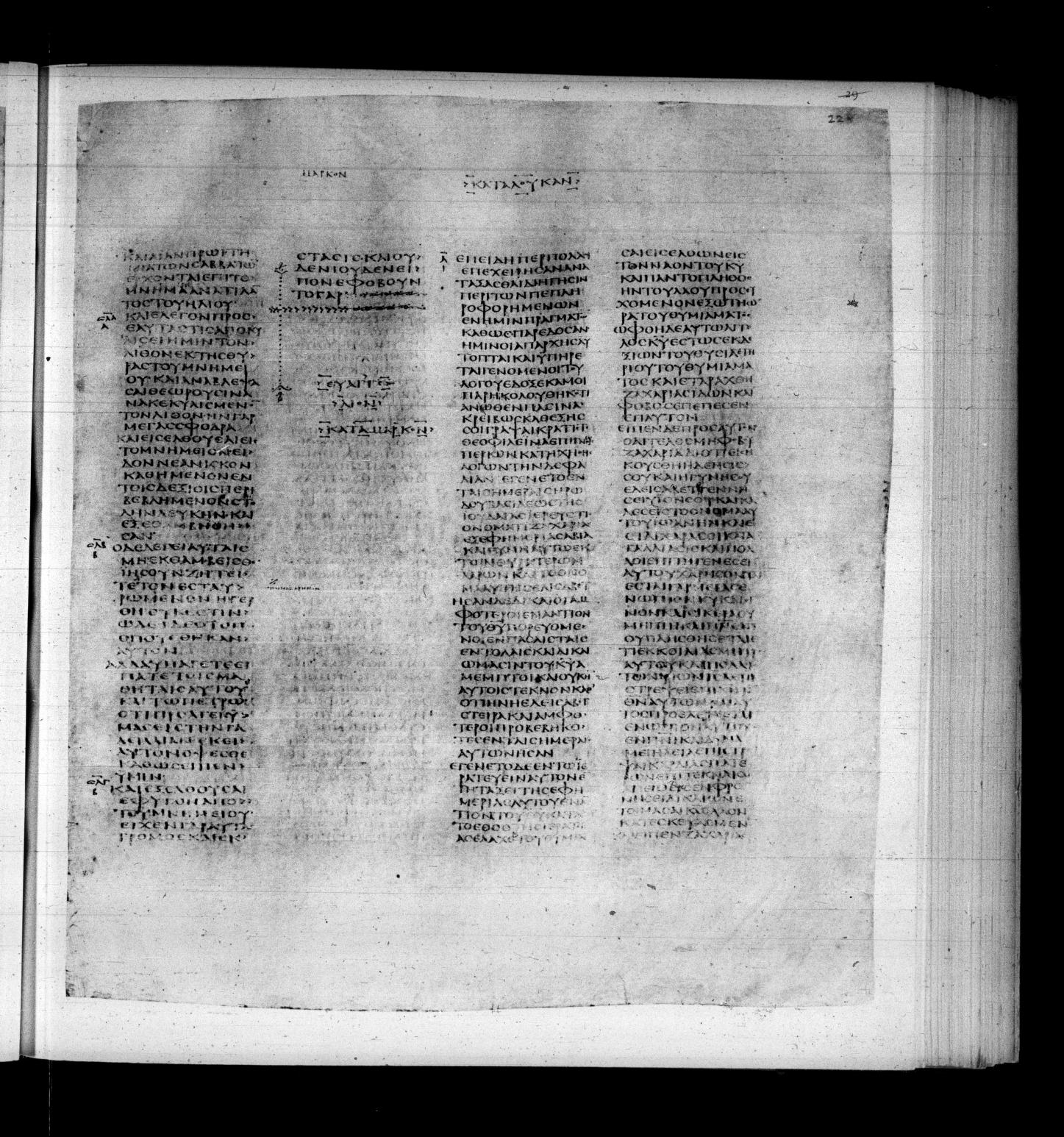
There is also evidence behind the traditional names. Irenaeus, Against Heresies III.1.1, attributes the four accounts to Matthew, Mark, Luke and John and links them to apostolic preaching. This is relevant early Christian testimony, but it is later testimony, not each writer’s signature or independent verification of each event. Questions about final composition and the development of traditions remain debated. Neither unquestioning acceptance nor wholesale rejection of the traditional attributions follows from Luke’s prologue. Authorship, independence and accuracy need separate consideration.
The courtroom comparison must respect these distinctions. Deuteronomy 19:15 requires two or three witnesses to sustain a charge; it supplies a rule for adjudicating accusations, not a formula that proves any proposition by counting documents. If two writers use a third, their agreement may demonstrate faithful reuse without adding two independent observations. Dependence is not itself falsehood. The proper question is what evidence supports the particular claim and how the surviving accounts relate to that evidence.
What genre and the hadith analogy can tell us
The books’ connected form also matters. Craig Keener’s Gospel, Good News, section 4.1, discusses the canonical Gospels in relation to ancient biography. A narrative can select events and speeches to present a person’s identity and significance without being a modern chronological transcript. This helps explain why selection and interpretation belong in our questions about the sources. Genre is not a guarantee that a scene happened, but neither does it establish that scenes were invented. Describing the books as narratives does not make them merely secular biographies.
The analogy with hadith identifies a related function: transmitted reports of words and actions can give later readers knowledge of a religious figure. That is useful for understanding why a Christian reads an account about Jesus instead of expecting every sentence to be spoken by Jesus. Yet a connected Gospel and collections of individual traditions have different structures and histories. Calling the Gospels sound traditions does not amount to an established Islamic technical judgment; no hadith reliability grade or proof of inspiration follows from the comparison.
IslamQA 85280 itself compares the extant Gospels to biography and hadith while distinguishing them from the revelation given Jesus. The analogy therefore cannot determine the result in either direction. Agreement about what a report does can coexist with disagreement about its authenticity, completeness and divine authority. These require evidence appropriate to the texts, not a label borrowed from another tradition.
Different emphases, one central subject
The four books’ purposes help explain why multiple accounts can communicate a shared message without being interchangeable. Matthew places Jesus in relation to Israel’s Scriptures: 5:17–20 presents his relation to the Law and Prophets; 28:18–20 closes with a mission to all nations and obedience to his teaching. Fulfillment, authority and discipleship connect these passages. The Jewish setting does not imply that other peoples are excluded.
Mark 10:35–45 sets the disciples’ desire for rank beside Jesus’ description of greatness as service and his own life given for others. It makes the connection between his mission and costly discipleship concrete. Luke’s investigative purpose in 1:1–4 belongs alongside his presentation of Jesus’ mission in 4:16–21: good news for the poor, liberation and fulfillment of Scripture. These are illustrative emphases, not exclusive subjects. Mark also teaches, Luke also makes claims about Jesus’ identity, and each book needs to be read as a whole.
John 20:30–31 states a selection principle directly: the narrated signs seek belief in Jesus as Messiah and Son of God, and life through him. This makes its theological and persuasive intention explicit. Knowing that intention helps a reader understand the account; it proves neither dishonesty nor divine authority. It also shows why taking the books seriously need not mean assuming that they are neutral transcripts: the claims and their presentation are available to examination.
John’s deeper teaching is open to readers
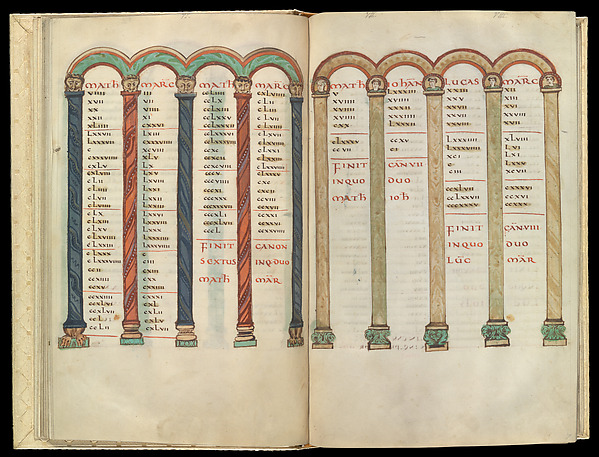
John’s treatment of Jewish festivals is one example of how setting carries meaning. In 7:2 the scene is the Festival of Booths, or Tabernacles; 7:14 places Jesus teaching in the temple; 7:37–39 joins the invitation to living water with the narrator’s explanation concerning the Spirit. The festival setting is part of the presentation of Jesus’ significance, not an incidental list of dates.
The promised Holy Spirit and the risen Jesus’ sayings are further distinctive subjects. John 14:16–26 reports the promise of an Advocate, explicitly named the Holy Spirit in verse 26. John 20:19–29 reports Jesus speaking peace after the resurrection, commissioning his disciples and addressing Thomas. Calling these reported sayings preserves the distinction between examining a testimony and proving the resurrection it describes.
The content of the risen sayings makes the authority question sharper. John 20:28 presents Thomas addressing Jesus as his Lord and God; 20:17 also presents Jesus calling the Father his God. Christian interpretation must account for both, rather than deleting the language a rival view can appeal to. Qur’an 5:72 rejects identifying God with the Messiah, and Ibn Kathir’s commentary interprets it as denying that Jesus is Allah. This is a substantive disagreement about Jesus and God, not a dispute that can be resolved by turning one book into four or four into one. The Christian proposal connects God’s saving work with Jesus’ forgiveness, death for sins and life-giving authority. Its promise of life through him supplies a definite positive alternative to the Islamic reading; the sources’ existence and coherence alone do not establish that alternative as true. The worked episode supplies a reason within that testimony: forgiveness is the central claim and healing its proposed sign, while John connects trust in Jesus with life. The positive Christian alternative is God’s forgiveness and saving presence through Christ, not another book whose title must be accepted. This identifies a reasoned claim for evaluation without confusing the account’s internal argument with independent proof of its truth.
Some teaching is given intimately to disciples, but this is not a hidden Gospel restricted to an initiated few. John makes it available to readers and announces its purpose in 20:30–31. Deeper understanding and belief matter to the book, yet readers can inspect the written case. These passages explain its presentation without resolving every later Christian–Muslim dispute about the Spirit or Jesus.
From the number of books to the question of revelation
The form of the books is now clearer, but the strongest objection is still about authority. IslamQA 85280 distinguishes revelation given Jesus from accounts composed later, while recognizing that the accounts contain material from his message. It also acknowledges uncertainty about whether the original Injil was compiled in writing during his life or transmitted orally. Neither the assumption that every Muslim requires a lost bound volume nor the assertion that an identifiable original volume disappeared is warranted by that position.
That distinction of models does not demonstrate replacement of the Christian message or corruption of a particular Gospel claim. Paul identifies the proclamation he received; Luke states a route of transmitted and investigated testimony. Those are sources and assertions to weigh, not guarantees. No alternative original Injil text is supplied in this comparison against which to establish the alleged replacement. This is a limit of the available comparison, not proof that Jesus received no revelation or that no such text ever existed. A claim of changed content needs evidence about that content; a different account of what revelation should look like cannot supply it by itself.
Qur’an 5:48 adds a substantive criterion: the Qur’an confirms and exercises authority over earlier Scripture. Ibn Kathir’s commentary, quoting Ibn Jarir, accepts earlier material agreeing with the Qur’an and rejects what contradicts it. This supplies a Muslim response to Christian appeals to their books, not just a concern over literary form. Christians do not accept Qur’anic authority over these books as an already established premise. Choosing between these standards requires supporting reasons; the word gospel cannot adjudicate their competing claims.
When the Qur’an’s authority is itself under examination, this conformity rule cannot serve as independent proof of that authority: the contrary testimony is rejected by first assuming the Qur’an is the standard. A Muslim can answer by offering independent grounds for accepting that revelation and then applying the rule; the article does not claim those grounds cannot exist. They need separate evaluation. What fails here is the attempt to settle that dispute from the Gospels’ number or narrative form. Neither a later claim to correct revelation nor an earlier testimony wins merely by its date. The same demand for reasons applies to Christian claims of inspiration and faithful transmission.
The Christian reply also concerns revelation. Dei Verbum 11 describes God acting through genuinely human authors, and section 19 describes Gospel writers selecting, arranging and explaining received material. This authoritative Catholic formulation allows inspiration and human composition together; it does not establish that all Christians explain inspiration identically or that a Muslim must accept the premise. A critic can still ask how these particular writers are shown to have transmitted revelation faithfully, especially where their accounts conflict with the Qur’an. Repeating inspired is no answer. Equally, narration alone does not show that God could not communicate through a text.
The distinction has an immediate use: separate the message, the narrative presenting it, and the grounds offered for trusting that narrative. Paul identifies a saving proclamation; the paralyzed-man accounts give content to a claim about Jesus’ authority; John explains why his selected testimony seeks belief and life through Jesus. In Christian confession, Jesus himself and his saving work are the heart of the good news. That does not redefine the Qur’anic Injil as a person or derive Jesus’ truth from the number of books.
Four books can therefore bear witness to one message without their number certifying their contents. Narrative form neither disqualifies them as witnesses to revelation nor establishes their inspiration; literary dependence neither supplies extra independent witnesses nor proves fabrication. Preservation, historical reliability and divine authority remain separate questions. Applied to the forgiveness episode, the useful inquiry is whether the report is credible and whether Jesus’ authority is best understood through the Christian reading or its strongest alternatives. The Gospels make that Christian claim identifiable and examinable: they direct attention to Jesus and the life Christians believe he offers, with reasons to assess rather than a verdict hidden in a book count. Its contribution to questioning Islam is therefore specific: neither the book-count objection nor a criterion that presupposes Qur’anic authority can independently establish Islam’s right to reject this Christian testimony. Its positive Christian contribution is equally definite: the sources present God’s saving forgiveness and life through Jesus, including the risen sayings that make the disagreement about his identity unavoidable. That case must be assessed on its evidence, not excluded before it is heard. This foundational step neither refutes all Islam nor completes the historical and theological case for Christianity.

Qur’an 5:46–48 · 1 Corinthians 15:1–11 · Mark 2:1–12 · Matthew 9:1–8 · John 20:17–31 · Luke 1:1–4