What does a wording difference establish?
Accepted Arabic readings of the Qur’an do not have identical wording at every point. Some differences concern sound or grammar; others change a word, a grammatical person, a command into a report, or the presence of a pronoun. These are distinctions documented inside the Muslim commentary tradition. They answer a precise question about wording; they do not by themselves establish corruption or rule out revelation.
The force of the evidence depends on the claim being tested. If every accepted recitation were said to contain exactly the same words, one confirmed word present in one and absent in another would be enough to disprove that unrestricted claim. But preserving several authorized readings is a different claim: the same evidence could be consistent with it. We therefore need to establish the difference first, then ask what warrants an account of its authority and transmission.
That distinction guides this examination of Samuel Green’s comparison of Hafs and Warsh and his arguments about the wider readings. The comparisons preserve his substantive examples while checking their grammar, context and proposed consequences; stronger explanations of the readings’ origins need further evidence. The foundational argument tested here is conditional: if universal verbal identity is offered to establish the Qur’an’s unique divine authority over the Bible, the accepted readings defeat its premise. Even a perfectly transmitted text would not establish revelation merely by being preserved. This removes one proposed ground for accepting Islam or preemptively rejecting Christian testimony, without claiming to refute every other Islamic ground. We must then examine the positive Christian claim about God’s saving action in Jesus.
Al-Tabari, commentary on Qur’an 57:24 · Al-Baghawi, commentary on Qur’an 1:4
What is a reading tradition?
In Muslim belief the Qur’an is God’s Arabic revelation to Muhammad. A qira’a is a recognized system of reading associated with a reader; qira’at is the plural. A riwaya is a transmission associated with a transmitter within such a system. Hafs transmits Asim; Warsh transmits Nafi. They are not two Arabic translations, nor were Hafs and Warsh the authors of separate scriptures. A mushaf is a written copy or codex. Rasm means its underlying written letter form; consonant-distinguishing dots, vowel signs and recitation marks add information to it.
Verse numbering is another layer. The same passage can carry different numbers under different counting traditions without gaining or losing its words. All references here use familiar Hafs numbering, so that readers can locate the passage before investigating the reading. An Arabic typeface or a different convention for marking a letter is not itself a different word. Conversely, genuine wording differences must not be dismissed as typography.
The witnesses used here are named classical Arabic commentaries, not independently authenticated facsimiles of the particular printed books photographed by Green. A commentary can document a received reading and its interpretation without identifying the provenance of a modern photograph. Keep that evidence distinction in view when checking the comparisons.
A word present in one reading
At 57:24 Hafs includes huwa, “He,” in the assertion that God is self-sufficient and praiseworthy; Warsh omits it. Al-Tabari explicitly records the difference in the regional readings and codices and accepts both. A word present in one accepted form and absent in another directly shows that the forms are not word-for-word identical. At the same time, his acceptance of both keeps the stronger authorized-diversity explanation in view. Both are complete Arabic assertions: removing huwa does not leave a fragment, because the surrounding construction still has a predicate.
At 3:133 Hafs reads wa-sari‘u and Warsh sari‘u: “and hasten” and “hasten.” The conjunction affects the connection with the preceding discourse, while both command hastening toward forgiveness. Small differences can be real without giving opposite instructions. These regional differences also warn against imagining that one absolutely uniform consonantal skeleton underlies every accepted reading at every location. Taken together, these examples show why a difference can be textually real while leaving a command or assertion compatible in sense. Identity of wording and compatibility of meaning are separate tests.
Does authorized variation answer the challenge?
The strongest Sunni response is that the plurality was authorized: sound readings came from Muhammad and should be understood together. If that is what was transmitted, preserving more than one form is not a failure of preservation. The classical criteria associated with Ibn al-Jazari include sound transmission, an acceptable Arabic construction, and compatibility, even by possibility, with one of the Uthmanic codices. “One of” matters because regional written forms differ at some locations. Written compatibility alone is not the complete traditional test and does not authorize inventing every pronounceable alternative.
The tradition’s assertion of authorization and a historian’s demonstration of origin are distinct. A named chain is evidence to investigate, not a substitute for investigating its dates, routes and documented variants. Equally, a critic must not call every accepted reading a guess merely because an undotted outline could permit more than one reading. Evidence of possible ambiguity is not evidence that every actual reader worked without oral teaching. The wording comparisons can distinguish kinds of variation; establishing their origin requires a different body of historical evidence. Neither task can replace the other.
The seven ahruf in hadith are not simply the seven readers selected centuries later. Ahruf is a traditional category whose precise meaning and relation to the later readings have been disputed. The number seven in that report and the later acceptance of ten reading systems do not form a mathematical contradiction: they count different things.
Yousef Wahb, Can the Qur’an Be Recited in Different Ways? · Al-Tabari, commentary on Qur’an 57:24
Forms, commands and reports
At 2:132 wassā and awsā both express Abraham’s charging or enjoining his sons. They use different verbal forms. Al-Qurtubi treats them as related expressions of the same instruction and associates an intensive sense with wassā; an extra alif in awsā does not automatically intensify the instruction, as the source suggests.
At 5:54 yartadda and yartadid are assimilated and unassimilated forms meaning “turns back.” The conditional warning remains. This is a useful example of a pronounced and written difference that need not change the central meaning.
At 21:4 Hafs has qala, “he said,” while Warsh has qul, “say.” The first reports Muhammad’s speech; the second commands him to speak. God is the issuer of the command, while Muhammad, the addressee, is its grammatical subject. Al-Qurtubi explains how an instruction and its fulfillment can both be true. The same Hafs/Warsh contrast occurs at 21:112, though the distribution among the other readers is not identical at the two verses.
At 91:15 wa-la and fa-la connect the final statement differently. The verb says that someone does not fear the consequence; it is not an impersonal assertion that “there is no fear for him.” Al-Qurtubi discusses different possible referents, including God, the slayer and Salih. The conjunction must be interpreted with that context; fa cannot always be mechanically expanded into “therefore.”
Persons, roots and descriptions
At 2:58 Hafs naghfir, “We forgive,” contrasts with Warsh yughfar: the sins “are forgiven.” This is active versus passive wording, not simply “We” versus an active “He.” The surrounding divine promise still identifies the giver of forgiveness. A real grammatical difference survives the correction.
At 2:140 taquluna and yaquluna distinguish “you say” from “they say.” The passage’s challenge about Abraham and the other patriarchs changes its form of address. At 2:259 nunshizuha and nunshiruha distinguish raising or reassembling the bones from reviving them. The commentary relates both expressions to the same restoration scene. Distinct roots do not require rival stories.
At 3:81 ataytukum and ataynakum distinguish divine “I gave you” from “We gave you.” Al-Qurtubi explains the plural as exaltation, not several gods. At 4:152 yu’tihim and nu’tihim distinguish “He will give them” from “We will give them.” God gives the reward in both readings. Pronouns can change while the intended giver remains the same.
At 43:19 ‘ibadu al-Rahman describes the angels as servants of the Merciful, whereas ‘inda al-Rahman locates them with or in the presence of the Merciful. ‘Inda is a locative expression, rather than simply an Arabic preposition. The descriptions are different and compatible. Both contexts reject the opponents’ characterization of the angels as female.
What vowels change
At 1:4 maliki and māliki distinguish “King” and “Owner” or “Master” of the Day of Judgment. These are different descriptions, even if a believer affirms both of God. Pronunciation, lexical meaning and theological compatibility are separate questions. Al-Baghawi identifies Asim among those reading mālik; Nafi belongs to the other group.
At 2:9 the second occurrence of the deception verb is yakhda‘una in Hafs and yukhadi‘una in Warsh, different verbal forms. The first occurrence is shared. The verse concerns the deceivers’ self-deception; translating one form as “seek to deceive” can explain context but is not a rule that this Arabic form always means an unsuccessful attempt.
At 2:10 yakdhibuna means that they lie, while yukadhdhibuna means that they deny or reject, explained by al-Qurtubi with reference to the messengers. The Warsh form is active, not “they were lied to.” The compared word occurs once in this verse. Lying and rejection are not identical descriptions, although they can describe the same opponents.
At 2:214 yaqula and yaqulu differ in grammatical mood. Al-Qurtubi explains the subjunctive here as the endpoint reached by the believers’ affliction; the indicative presents the resulting scene. The passage cannot safely be divided into a simple purpose “so that” in one reading and “until” in the other. A final vowel does not mechanically settle the whole causal interpretation.
When grammar affects interpretation
The next question is how far a grammatical difference carries an interpretation. At 2:184 the ransom expression has a singular needy person in Hafs and plural needy people in Warsh, with a corresponding change of grammatical construction. A quick English comparison might suggest that one missed fast requires feeding more people in the second reading. Al-Qurtubi expressly gives a distributive explanation: a needy person for each relevant person or day. The difference in wording is therefore established; that proposed difference in the legal number is not. Other legal questions about eligibility and amount need their own evidence.
At 3:146 qātala, “fought,” contrasts with qutila, “was/were killed.” This changes active to passive wording. The passive sentence has more than one classical grammatical interpretation: the prophet, the followers, or part of the accompanying company can be understood as those killed. A gloss must not silently choose one analysis as though the reading itself settles it.
At 5:67 risalatahu and risalatihi are not adequately distinguished as accusative versus genitive. The second form is risalātihi: “His messages,” plural, compared with “His message,” singular. Both function as accusative objects; the feminine sound plural takes a kasra in this case. The singular can encompass the whole revelation. Both readings command full conveyance; neither licenses withholding a message.
At 28:48 sihrani denotes two works of magic, whereas sahirani denotes two magicians. The source reverses the grammatical labels: sihr is the noun and sahir the active participle. Al-Tabari records different identifications, including books such as Torah and Qur’an, or persons such as Moses and Muhammad or Moses and Aaron. These are the opponents’ accusations. The wording changes their description; it does not make the Qur’an endorse magic or establish one exclusive pair of referents.
At 66:12 kutubihi, “His books,” contrasts with kitabihi, “His book,” in the description of Mary’s belief. The pronoun refers to her Lord. Al-Qurtubi explains that the singular can denote the class of revealed scripture. It therefore need not restrict Mary to one book physically beside her. A singular/plural difference is evidence about wording, not automatic evidence for different religious loyalties.
Where the basmalah belongs
The basmalah is the formula invoking God’s name at the openings of surahs, except surah 9; its occurrence inside 27:30 is a separate, undisputed case in the discussion. Four questions must be distinguished: whether a formula is printed, whether it is counted as a surah’s verse, how it is understood as revelation or a separator, and how it is recited in prayer or between surahs.
Ibn Kathir’s introduction to 1:1 reports different positions, including its status in the opening surah, its relation to other surahs, and audible or silent recitation. He attributes different positions to Malik, Abu Hanifa, al-Shafii and Ahmad, including more than one report from some authorities. These disagreements cannot all be reduced to “Hafs says yes, Warsh says no.” Nor does assigning a different verse number by itself erase the formula.
Green says that both printed forms include the basmalah, but multiplies 113 openings by four words to conclude that Hafs contains 452 extra words. That is not a demonstrated comparison of written contents. A count of words treated as part of each surah is a different exercise and needs an explicit convention. We retain the substantive disagreement about verse status and liturgical treatment; we do not repeat an unproved claim of 452 extra written words.
How to describe and count differences
The source usefully distinguishes changes in grammatical endings, consonants, noun number or gender, substituted words, word order, additions or omissions, and dialectal features. These are analytical categories, not seven additional scriptures or a demonstrated definition of the seven ahruf. The comparisons above establish several categories without needing every example to alter doctrine.
Reading manuals and annotated translations allow comparison beyond Hafs and Warsh. Bridges Foundation explicitly offers a translation representing the ten readings; this is a Muslim study resource, not an admission that Muslim belief is false. A translation can show meaning-bearing differences while leaving some sound differences unrepresented. Its notes should be checked against the Arabic and reader attributions.
Counting can describe the extent of variation only after we decide what a difference means in the count. Green gives approximately 3,000 differences, counts 965 translated variants, and cites 10,243 entries in a wider encyclopedia. These are not independently verified totals here. A responsible count specifies the edition and dataset, whether it counts locations, alternative forms or pairs, whether repeated rules count at every occurrence, and whether noncanonical reports are included. Without that common unit, the figures cannot be compared as interchangeable measures of change in the accepted Qur’an.
The word version can mean a transmitted form of a work. Green explicitly allows this description of different forms of one Qur’an, then argues that there are ten Qur’ans because Qur’an means recitation and the ten reading systems are distinct recitations. This counts recitations under his chosen definition; it does not, by itself, resolve whether they are authorized forms of one revelation or show that any has been corrupted. We should acknowledge the distinct transmitted forms while testing their claimed authorization through historical evidence. A dictionary definition cannot settle that dispute.
Written witnesses and oral transmission
To move from differences to an account of their origin, we must examine oral teaching and written witnesses together. Calling the Qur’an primarily oral does not make wording differences disappear: a mushaf can record a recited difference, and oral and written transmission can support each other. Qur’an 80:11–16 uses the imagery of written sheets. That imagery is not a historical demonstration that Muhammad left a single final bound volume; the wording comparison does not require such a demonstration.
Sahih al-Bukhari 4992 reports Umar and Hisham disagreeing over a recitation and Muhammad accepting both, in connection with seven ahruf. Sahih al-Bukhari 4987 reports Hudhayfa’s alarm over disagreements, Uthman’s copying from Hafsa’s sheets, an instruction concerning Quraysh wording in disputes, provincial distribution and destruction of other written material. These are reports from the Muslim tradition. Their content matters, but reporting them does not authenticate every detail as an independently observed seventh-century event.
A standard written form can constrain variation without settling all vocalization. The source describes early script’s limited marking, errors in reading it, and the eventual selection of reading systems. Its example involving 9:3 illustrates how a case ending could attach the messenger to the wrong part of a sentence. That possibility is not evidence that the mistaken construction is itself canonical, nor that every accepted variant arose from an error of that kind. This leaves a historical task: distinguish a reading’s documented transmission from a possibility that its written form merely permits.
The ten-reader tradition includes Nafi, Ibn Kathir, Abu Amr, Ibn Amir, Asim, Hamza, al-Kisai, Abu Jafar, Yaqub and Khalaf. The first seven became especially associated with Ibn Mujahid’s selection; the other three belong to the later ten-reader canon. A reader can also be a transmitter: Khalaf’s transmission from Hamza and his own reading are different roles, just as the name al-Duri occurs in more than one transmission. Such names are not extra scriptures. The source’s geographic table should not be mistaken for an exhaustive present-day census.
The traditional two-transmitter roster is Nafi: Qalun and Warsh; Ibn Kathir: al-Bazzi and Qunbul; Abu Amr: al-Duri and al-Susi; Ibn Amir: Hisham and Ibn Dhakwan; Asim: Shuba (Abu Bakr ibn Ayyash) and Hafs; Hamza: Khalaf and Khallad; al-Kisai: Abu al-Harith and al-Duri; Abu Jafar: Ibn Wardan and Ibn Jammaz; Yaqub: Ruways and Rawh; Khalaf: Ishaq and Idris. A roster identifies transmission relationships; it neither demonstrates every chain nor supplies a present-day usage census. Hafs is widespread and Warsh is associated especially with North and West Africa; local practice is not exhausted by these two.
Canonization and coercion
The source’s examples of coercion deserve a concrete account. Christopher Melchert’s study The Variant Readings in Islamic Law discusses Ibn Mujahid’s involvement in the cases of Ibn Miqsam in 322 AH/934 CE and Ibn Shannabudh in 323 AH/935 CE. In the accounts he analyzes, Ibn Miqsam withdrew his position under threat of punishment: the contested approach allowed an Arabic reading compatible with the written form without the required received tradition. Ibn Shannabudh, who used non-Uthmanic readings, recanted after flogging. These are documented historical reports analyzed by a modern scholar; we have not independently authenticated the medieval witnesses he cites.
Melchert nevertheless argues that these cases do not establish state enforcement of Ibn Mujahid’s precise Seven: the reported disputes concern departure from received tradition or the Uthmanic codex, not a decree naming those seven systems. The source’s unspecified total of earlier systems remains unchecked. Selection, scholarly reception and punishment are distinct questions, and evidence of coercion should neither be concealed nor inflated into proof that a selector invented a reading. This uses the accepted manuscript’s relevant discussion and conclusion, not a claim that every detail of canon formation is resolved.
The strongest traditional reply is that the readings preserve authorized diversity within the Uthmanic codices. The strongest historical question is what evidence connects each particular form and route to the earliest recitation. The disagreement about ahruf leaves work to do; it is not a proof that any relation to the readings is impossible. Nor does the Qur’an’s referring to itself as one book rule out, by grammar alone, multiple authorized readings of it.
Yousef Wahb, Can the Qur’an Be Recited in Different Ways? · Sahih al-Bukhari 4992, Virtues of the Qur’an
Preference, translation and Muslim disagreement
Muslim disagreement about transmission cannot be reduced to a choice between accepting every claim and denying the Qur’an altogether. In Al-Bayan’s examination of readings, the Twelver scholar Abu al-Qasim al-Khoei disputes proof of mass transmission through successive generations, tawatur, for each reading while distinguishing that question from transmission of the Qur’an itself. He also discusses permission to use established readings in prayer. This is not an admission of wholesale corruption. Green’s mediated quotations from Taha Husayn and Mir Ahmed Ali point to related dissent, but their exact cited editions were not independently authenticated here; they cannot bear a stronger conclusion than the inspected evidence.
Al-Tabari gives a concrete case of critical preference: in his discussion of 1:4 he argues for malik, “King.” Yet at 57:24 he accepts both pronoun forms. The source’s claim that he calls all mālik readers stupid conflates his preference with criticism of particular interpretations and a different accusative construction, mālika. A contemporary Sunni reply by Yousef Wahb expressly distinguishes preferring a reading for eloquence or interpretation from denying another canonical reading’s authenticity. Preference does not automatically establish rejection of revelation. Translator choices offer another way to test that inference: selecting a wording for one translation does not necessarily decide the status of all alternatives.
Abdullah Yusuf Ali’s translation provides a concrete case of selecting how to represent a reading. In the reproduced revised text inspected here, 21:4 and 21:112 have “Say”; notes 2666 and 2767 explain an imperative understanding, although Hafs has the report “he said.” The report/command contrast is independently documented in Arabic commentary. At 23:112, however, the inspected revised text has “He will say,” while note 2948 discusses the imperative alternative. Green’s claim about a selection there must not be generalized across editions: his exact 1989 Amana edition was not authenticated.
The source also quotes Alan Jones describing a mainly Hafs basis with occasional preference for Warsh and references to Ibn Masud’s readings. These attributed preface and footnote claims should not be treated as independently authenticated quotations from their editions here. They illustrate a research question, not evidence that every translator rejects the readings he does not select.
At 33:6 Yusuf Ali’s note 3674 reports a fatherhood addition associated with Ubayy, while the translated verse omits it. Al-Tabari independently records father wording in reports through al-Hasan and Qatada, and fatherhood as an explanation through Mujahid. That confirms an early exegetical report, not an authenticated attribution to Ubayy or an additional canonical Hafs/Warsh reading. Reporting a companion reading is not endorsing it as canonical. The relation of such wording to Muhammad’s spiritual role must be examined separately from biological descent and from the text’s rule concerning his wives.
Choosing which reading to translate may express preference, fit a translation’s purpose, or explain an alternative considered compatible with the main text. It does not logically entail that the translator considers every other accepted reading false. Christian editors likewise compare biblical readings, but the aims and authorization claims of the two traditions should not be collapsed into a single transmission model.
Al-Qurtubi, commentary on Qur’an 21:4 · Al-Baghawi, commentary on Qur’an 21:112
Can forgetting explain the readings?
Could memory failure explain the surviving differences? Green proposes that readers reconstructed forgotten words by interpreting ambiguous writing. That proposal needs a link between a particular lapse and a particular later form. Qur’an 87:6–7 and 2:106 discuss remembering, divine permission and abrogation in their theological contexts. Bukhari 5037 and Muslim 788b report Muhammad being reminded of recitation; the report itself depicts someone else retaining the verses. Bukhari 401 concerns mistaken prayer performance, not an identified variant in a Qur’anic word. A Sunni response explained by IslamQA distinguishes temporary forgetting after conveying a passage from communal loss, and distinguishes both from abrogation. These distinctions give real alternatives to a reconstruction from lost words; they do not independently authenticate every transmission route.
Muslim 1050 reports Abu Musa telling the reciters of Basra about two surahs formerly recited whose contents he mostly no longer remembered. One resembled Bara’a, surah 9, in length and severity; he recalled the image of a person who would desire a third valley of wealth after having two. The other resembled one of the Musabbihat surahs; he recalled a rebuke about saying what one does not practice, with a record bearing witness and future accountability. This is more substantial than a momentary lapse over one verse and raises a genuine question about reported recitation no longer present in full. But the report describes his recollection; it does not independently establish that the entire community forgot two complete surahs after Muhammad’s death. Interpretations involving abrogation also require examination. Bukhari 6830 reports Umar’s concern about the stoning passage and a statement about descent. His recalling them must not simply be described as their being forgotten. These are real questions about reported recitation, memory and revelation status. Neither report identifies the origin of the contrasted words in 57:24, 28:48 or any particular Hafs/Warsh pair. Connecting them causally to the later ten systems requires evidence of the missing transmission steps. We therefore do not present forgetting as the systems’ established cause.
The source also argues that no complete collection by Muhammad means no whole reading can have an authentic chain to him. Bukhari 4986 describes a later collection from written materials and people’s memories. Compilation of a physical codex is not the same claim as teaching or memorizing its contents. The first can occur later without making the second logically impossible. The historical strength of a particular chain remains an evidence question; neither acceptance nor rejection follows from the absence of one bound book.
Finally, the claim that the readings must be mixtures of distinct ahruf and therefore require a separate chain for every fragment depends on identifying the ahruf and showing how the mixtures arose. Those premises have not been demonstrated by the wording comparisons. A critical investigation can ask for evidence about individual readings without declaring oral transmission impossible in advance.
What the biblical comparison lets us examine
The result matters for a reader deciding whether to trust Islam’s claim to divine authority. If that trust, or rejection of the Bible, rests on the premise that every accepted Qur’anic reading has identical wording, the premise fails. A Muslim can instead defend preservation of authorized plurality; that is a different claim whose authorization a historian can investigate. It does not restore universal verbal identity or turn preservation alone into proof of divine origin. The same discipline requires asking which biblical words differ, what the difference affects, and what positive evidence bears on the Christian claim.
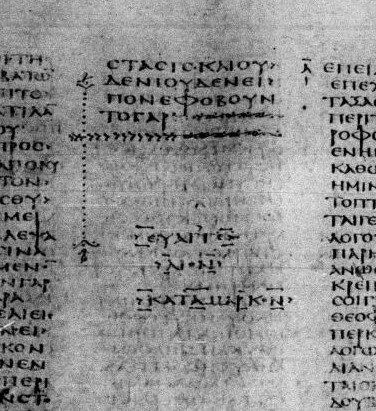
The USCCB’s edition of Mark 16 openly prints and discusses longer and shorter endings. Its notes distinguish literary origin and Catholic canonical reception; Christians do not all express those judgments identically. This is a substantial example, not a claim that all biblical differences are tiny or that Qur’anic and biblical variants have the same size or origin. A Christian argument cannot dismiss all Qur’anic alternatives as corruption while treating all biblical differences as harmless by definition.
A claim that Mark’s disputed ending removes all identifiable Christian testimony about God’s saving action must account for 1 Corinthians 15:3–17. Paul transmits a received message that Christ died for sins, was buried, was raised, and appeared to named witnesses. In verse 15 he describes the proclamation as testimony that God raised Christ; in verses 14–17 he makes the truth of Christian faith and deliverance from sin depend on whether Christ was raised. The proclamation is available outside Mark’s disputed ending. It supplies a specific positive Christian claim to assess: God acts through Jesus’ death and resurrection to save, rather than faith being established merely by uniform wording.
Paul’s report does not prove resurrection by proclaiming it, authenticate every named appearance, or settle every reconstructed biblical word. His account of the event and its saving meaning both require evaluation. But if this received testimony is trustworthy, it gives a reason to turn to the God proclaimed through Jesus; its force does not depend on pretending that Mark has no textual problem. Examine what Paul says he received, whom he names, and what supports or challenges that testimony. The failure of an Islamic word-identity argument does not make Christianity true by default. It removes one unsound barrier to considering the positive Christian case: uncertainty about a passage is different from having no available testimony to God’s saving action worth assessing.