


Yes: someone who does not know Arabic can learn what a Qur’anic passage teaches through a translation. But understanding its teaching is different from reproducing every feature of its Arabic expression, giving the translated words the same status as the Qur’an, or permitting them to replace Arabic in Muslim prayer. The answer depends on which of these claims we are testing.
The distinction matters because a translation can succeed at one task without succeeding at all of them. To establish that it helps a reader understand, we need to examine what meaning it conveys. To establish that it may replace a prescribed recitation, we need a further religious argument. The history of this debate becomes clearer when those two tests remain separate. For someone weighing Islam’s truth claims, this also raises a question of authority: does the Qur’an’s Arabic form establish its divine origin, and does dependence on translation disqualify the Bible?
Dar al-Ifta, The accuracy of the different translations of the Quran, 25 February 2015
Why Arabic matters
The Qur’an calls itself Arabic and connects that language with understanding in 12:2, while presenting Muhammad’s mission as extending to humanity in 34:28. Its first language and its wider audience therefore raise a practical question: how can people who do not speak Arabic understand the message?
Learning Arabic and receiving an explanation can work together. Al-Shafi‘i’s al-Risala, paragraph 167, requires Muslims to learn Arabic within their ability for confession, Qur’anic recitation and prayer formulas. Egypt’s Dar al-Ifta permits teaching and interpreting the Qur’an in other languages in a 2015 ruling. A learner can thus seek the meaning of words while learning to recite them; a requirement about worship does not by itself forbid translated understanding.
This leaves a question about quality: how much does a particular translation convey? Dar al-Ifta’s 2015 discussion acknowledges that translators must choose between relevant senses and ways of expressing emphasis. Comparing explanations when a disputed point matters is a response to that difficulty. The question is what a rendering conveys, what it leaves uncertain, and whether that difference matters in the passage.
Dar al-Ifta, The accuracy of the different translations of the Quran, 25 February 2015
What survives when the words change?
Al-Shatibi offers a useful starting point in al-Muwafaqat: several sentences may all report that Zayd stood up, while using different emphasis or answering different expectations. They communicate the same event, but they do not do exactly the same work. A translation may likewise carry basic information while losing part of the expression’s force.
That is a real achievement, with a real limit. Meaning and emphasis can interact, so identifying the event is not always enough to explain the whole passage. A careful translation may need a note or the original beside it. The risk that a reader will mistake one rendering for the full range of meaning calls for fuller explanation, not the conclusion that nothing has been understood.
This also clarifies the Qur’an’s challenge to produce a comparable chapter in 2:23–24, extended to humans and jinn in 17:88. Muslim discussions of i‘jaz, or inimitability, ask what makes the Qur’an impossible to match. Learning a teaching through translation is different from assessing a claim about the exact Arabic expression. Loss of that expression in translation alone neither proves nor disproves divine origin.
An argument for divine origin needs more than this loss. Human literary works can also resist exact translation, so difficulty reproducing a text does not distinguish divine speech from human writing. A Muslim may reply that the Qur’an’s whole character, rather than mere translation difficulty, supplies the sign. That is a stronger claim to examine on its own evidence. Arabic form or translation loss alone cannot establish that the Qur’an should overrule a conflicting biblical account.
A manuscript can show how translated understanding and retention of the Arabic work together. Princeton’s Garrett 33Ge has Arabic lines followed by Persian and Chagatai translations. Its catalog tentatively assigns it to Transoxiana and the fifteenth century. The languages appear together, so access to meaning and retention of the Arabic can coexist. This manuscript does not establish when that arrangement first began.
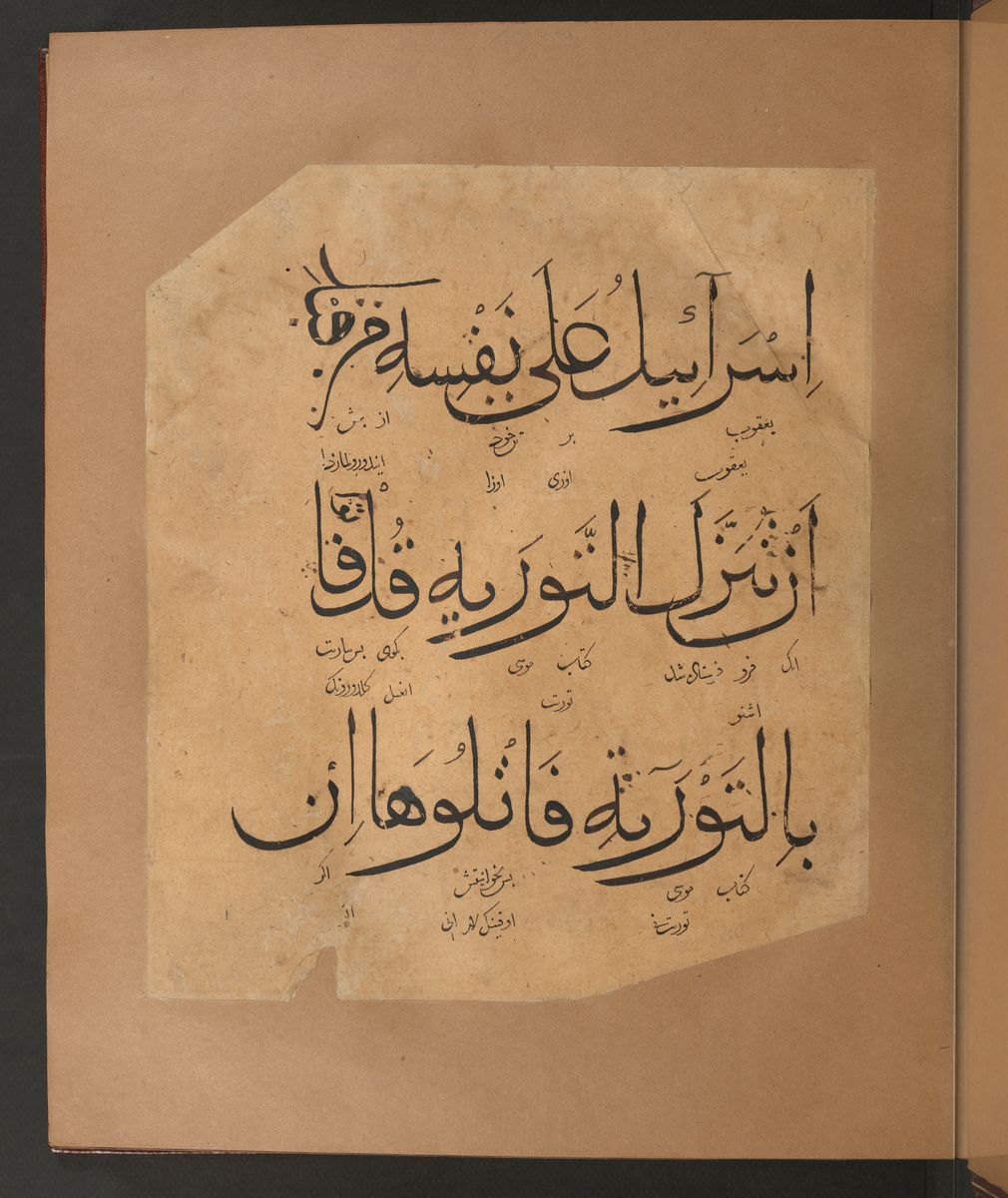
Al-Shatibi, al-Muwafaqat 2:107 · Princeton University Library, Garrett 33Ge, Qur’an with Persian and Chagatai translations · Qur’an 2:23–24 · Qur’an 17:88
Understanding and worship ask different questions
The strongest Muslim objection to a simple pro-translation argument concerns what the worshipper is doing. Explaining a message and performing a prescribed act of worship are different activities. If that act requires the given Arabic wording, a useful explanation cannot replace it merely by being useful. This objection succeeds against that inference; it does not show that the explanation conveys no meaning.
Some Hanafi reasoning appealed to Qur’an 26:196 and 87:18–19, which connect the message with earlier scriptures. But agreement in teaching need not mean identical wording. In 87:14–19, the reference follows instruction about purification, prayer and the lasting life to come. That can support continuity of teaching without deciding what language belongs in a later worship service.
The missing step is authorization. A reader may grasp a shared teaching without having established which text or wording a religious practice requires. This is why historical disagreements about translated prayer deserve their own examination, rather than being settled in advance by the fact that translation helps people learn.
The historical disagreement was real
The jurists did debate that further step. Al-Sarakhsi’s al-Mabsut records three positions about Persian recitation in prayer: the opinion attributed to Abu Hanifa permits it, though it is described as disliked; his disciples Abu Yusuf and Muhammad allow it only for someone unable to recite Arabic; and al-Shafi‘i’s position rejects it as a substitute. These are positions transmitted in a later legal work, not recordings of the original conversations.
The disagreement concerned more than convenience. Al-Sarakhsi presents the disciples as valuing both the Arabic composition and its meaning, with an allowance for inability. The argument attributed to Abu Hanifa places greater weight on conveying the divine message. An exception for incapacity therefore does not mean that its supporters regarded Arabic wording as irrelevant.
Later rulings also differ. A Dar al-Ifta ruling dated 25 April 1961 selected the broader permission. A 2025 Darulifta Ahlesunnat ruling follows the disciples and reports that Abu Hanifa changed his earlier view. The International Islamic Fiqh Academy’s 2023 resolution rejects replacing Arabic prayer with translations, while expressly excepting very new converts and those completely incapable of learning Arabic. These sources cannot be combined into a claim that every Muslim has always held one rule.
What the early reports add to the argument
Reports about early practice were used to support these arguments, but their value depends on what they actually establish. Al-Sarakhsi repeats a report that Salman supplied a Persian rendering of the opening chapter for worshippers learning Arabic. The checked passage does not say Muhammad approved it. It shows that jurists used the story; its presence in a later book does not by itself establish that the event occurred.
Sahih al-Bukhari 4992 describes Muhammad accepting two recitations that their reciters said he had taught them. It does not give readers permission to invent their own paraphrases. Other reports describe an interpreter in the Heraclius encounter and Hebrew scripture explained in Arabic. The latter report, Bukhari 7542, also warns hearers against automatically accepting or rejecting what is related. These accounts show cross-language communication within the tradition; they neither endorse every biblical claim nor settle which words count as Qur’anic recitation in prayer.
The useful result is narrower than a universal permission or prohibition. These sources make translated communication intelligible within the tradition while leaving the authority and conditions of each proposed use to be examined. That distinction also helps us approach another scripture without demanding that translation settle every question about it.
Why this matters when reading the Bible
Consider what happens inside a Gospel. In Mark 5:41, the narrative preserves the Aramaic expression Talitha koum, explains it as an instruction to the girl to get up, and then reports that she did. The reader can understand the reported instruction through the explanation while recognizing that the Aramaic wording remains distinct. Cross-language explanation belongs to the Gospel’s own communication; changing languages is not, by itself, evidence that its message has been falsified.
That example fits the Bible’s varied language history: much of the Old Testament is Hebrew, some passages are Aramaic, and the New Testament books are Greek. It does not mean that every translation is accurate. It gives us a reason to assess a rendering against its source, rather than reject the possibility of understanding before reading it.
What becomes accessible is a claim about Jesus, not only an interesting phrase. Mark 5:36–42 presents him calling Jairus to faith in the face of death and restoring the child to life. Hebrews 1:1–3 makes the Christian claim more explicit: God speaks through the Son, through whom he made the world, who reveals God’s character and brings purification from sins. On this account, coming to know God means attending to who the Son is and what he does; it does not depend on reproducing one sacred expression’s every linguistic feature.
A Muslim can reply that a miracle does not make Jesus divine: Qur’an 5:110 also attributes his raising the dead to God’s permission. That objection is sound against using this miracle alone as proof of deity. The disagreement reaches further. Qur’an 4:171 presents Jesus as God’s messenger and rejects divine sonship; Ibn Kathir’s commentary treats him as a created servant. Hebrews presents the Son as the one through whom God created. Understanding that difference is necessary before judging which testimony deserves trust.
Christian traditions also value original texts. The Reformed Westminster Confession 1.8 calls for translation while assigning authority to the original-language texts. The Catholic document Dei Verbum, section 22, supports suitable translations, especially from original texts. These are distinct Christian positions, not proof that every version is equally accurate.
Read Mark 5:35–43 alongside Hebrews 1:1–3 with that question in view. The Christian case concerns God making himself known through the Son who brings life and purification from sin. Translation makes this claim understandable; it does not authenticate the reported miracle, prove inspiration or establish every translation’s accuracy. But the argument that Arabic form or translation difficulty gives the Qur’an an automatic right to dismiss that testimony fails: neither feature establishes divine origin. The claim about Jesus must be assessed on its evidence, rather than ruled out because it reaches us in another language.