No. Accepted Qur’anic reading traditions sometimes differ in Arabic words and meaning. These differences are not simply different English translations or different voices reciting the same text. They rule out an unrestricted claim that every accepted reading has exactly the same wording. They do not, by themselves, establish that the Qur’an was corrupted or cannot be revelation.
The distinction matters because the two preservation claims require different evidence. If someone claims complete verbal identity, one genuine word present in one reading and absent in another is enough to disprove it. If someone claims that God authorized several readings and that these were preserved, pointing out their differences does not answer that claim. We then need to examine the evidence for their authorization and transmission.
That second claim is a serious Muslim response: it allows differences as part of revelation rather than denying what the texts say. The issue matters when exact verbal identity is offered as a foundation for the Qur’an’s unique divine authority and for rejecting the Bible. The readings defeat that premise; even identical transmission would not, by itself, prove divine origin. It is therefore unsound to accept Islam or dismiss Christian testimony on that ground. We need positive reasons for the religious claims being made.
Al-Tabari, commentary on Qur’an 57:24 · Yousef Wahb, Can the Qur’an Be Recited in Different Ways?
A word present in one reading and absent in another
Qur’an 57:24 gives a direct example. In his commentary, al-Tabari records that Medinan readers and their written copies omit huwa, whereas Kufan readers and their copies include it. The word means “He.” Both forms make a complete assertion about God’s self-sufficiency and praiseworthiness; the shorter form is not an unfinished phrase. Al-Tabari accepts either reading.
This establishes something precise: a Muslim commentary documents a word being present or absent in accepted recitation and written copies. We do not have to depend on an opponent of Islam’s photographs or an English translator’s choice to see the difference. Yet al-Tabari’s acceptance of both also shows why the next question cannot be skipped. A difference in wording and a judgment that one wording is illegitimate are separate things.
What the names and written marks mean
To follow the comparison, we need a few distinctions. In Muslim belief, the Qur’an is revelation recited in Arabic. A mushaf is a written copy. A qira’a is a recognized reading system; qira’at is the plural. A riwaya is a transmission of such a reading. Hafs transmits Asim’s reading, while Warsh transmits Nafi’s. The familiar expressions “Hafs Qur’an” and “Warsh Qur’an” refer to these transmissions, not books independently composed by Hafs and Warsh.
Written Arabic has several layers too. Rasm means the underlying letter forms. Consonant dots distinguish letters that share a shape, while vowel marks supply further information about pronunciation and grammar. Different regional writing conventions may mark the same intended letter differently. Verse numbering is separate again: dividing a passage differently does not necessarily add or remove any words.
These distinctions help us avoid mistakes in both directions. A different-looking page need not contain different wording; a genuine wording difference cannot be explained away merely as a different-looking page. The useful comparison is what the Arabic actually says.
Different words do not always make conflicting claims
At the opening chapter’s 1:4, malik and maalik—the latter with a longer first vowel—mean “king” and “owner” or “master.” The descriptions overlap without being identical. Both can express God’s authority on the Day of Judgment. Al-Tabari discusses them and argues for “king.” His preference shows that the difference matters for interpretation; the compatibility of the descriptions shows that different meanings need not contradict one another.
At 28:48, the difference goes beyond two descriptions of the same authority. Sihran is a noun referring to two instances or works of magic; sahiran is an active participle referring to two magicians. The wording changes what unbelievers are represented as accusing. Al-Tabari also records different interpretations of the referents, including pairs of scriptures and pairs of persons. We should therefore retain the distinction without pretending that a single English gloss resolves whom or what the accusation concerns.
Grammar can change while the central promise remains. At 2:58, the contrast is between an active promise of forgiveness and a passive expression: “we forgive” and “your sins are forgiven.” It is not simply a switch from an active “we” to an active “he.” At 2:184, “a poor person” and “poor people” also differ, but the plural may distribute the obligation across several people or days. That wording alone does not establish that each individual must feed a different number of recipients. A legal conclusion needs an argument beyond noticing the grammatical difference.
The opening formula Bismillah illustrates why even a striking total can mislead. Whether the formula is written, whether it counts as a verse of a chapter, how verses are numbered, and how it is recited in prayer are separate questions. Muslim scholars disagree about its verse status in the opening chapter. Such disagreement does not show that one written Qur’an physically contains hundreds of words absent from another. The source’s claim of 452 extra written words cannot be established by turning a difference in status or counting into a difference in what is printed.
Together these examples support a measured conclusion. There are real differences of wording and meaning, not merely different accents. Their significance must be assessed passage by passage: compatible descriptions, different referents, grammatical alternatives and disputes over verse status do not all establish the same thing.
What would establish authorized diversity?
The strongest Muslim answer now comes into focus: these differences can belong to what God revealed, rather than represent damage to it. Umar’s report about hearing Hisham recite differently supplies an important traditional basis. Muhammad is represented as accepting both recitations and speaking of seven ahruf. But ahruf and the later recognized reading systems are not interchangeable terms. Their relationship needs explanation; “seven ahruf, but ten readings” is not by itself an arithmetic contradiction.
The report about Uthman addresses a different part of the history. It describes commissioning copies, instructing the copyists to use Qurayshi wording where they disagreed, and ordering other written materials destroyed. This is evidence for deliberate standardization in the traditional account. It does not, on its own, identify precisely which earlier oral differences survived or prove that every later reading was invented.
That leaves a real historical inquiry: what connects each received reading to the earliest recitation? Named teachers and transmitters are evidence to investigate. They cannot be dismissed merely because collection into a book happened later. Bukhari 4986 describes gathering material after Muhammad’s death; collecting a physical book and transmitting recitation by memory are different activities. The date of the former does not make the latter impossible.
Reports about forgetting cannot supply the missing connection automatically either. In the reminder report, someone else still retains the recitation. A Sunni reply presented by IslamQA distinguishes an individual’s temporary forgetting after conveying revelation from the community losing it; it also distinguishes forgetting from abrogation. Those are substantive alternatives to the source’s proposed explanation. To establish that forgotten words caused particular later readings, we would need evidence connecting those words to those transmission events. The reports cited do not provide that link.
We can therefore question transmission without claiming to have disproved it. We can also recognize a scholar’s interpretive preference without assuming that he judged the alternative invalid: al-Tabari prefers “king” at 1:4 and accepts both forms at 57:24. The observed differences are established; their authorization and historical transmission remain questions to examine through the relevant evidence.
Sahih Muslim 1050, Zakat · Al-Tabari, commentary on Qur’an 1:4 · Al-Tabari, commentary on Qur’an 57:24 · Yousef Wahb, Can the Qur’an Be Recited in Different Ways?
A concrete reason to examine biblical testimony
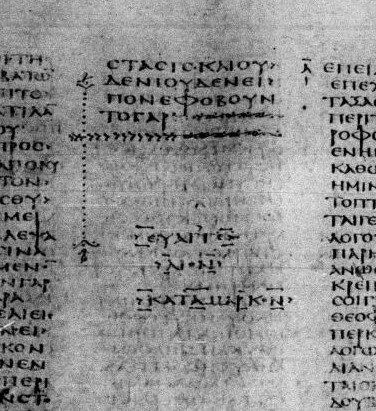
The same care should shape a comparison with the Bible. Christians should acknowledge substantial textual problems openly. The Catholic USCCB edition discusses both the longer and shorter endings of Mark. Its note distinguishes the longer ending’s traditional canonical acceptance from whether Mark wrote it. Christian acceptance of scripture does not make that textual question disappear.
What, then, does uncertainty about Mark’s ending affect? Is the Christian proclamation about Jesus dependent on those disputed verses? In 1 Corinthians 15:3–17, Paul presents a received message that Christ died for sins, was buried, was raised, and appeared to witnesses, including Cephas and James. He explicitly describes the proclamation as testimony that God raised Christ. This identifies a Christian claim about God’s saving action outside Mark’s disputed ending. The existence of that testimony does not, by itself, prove that the events occurred.
Paul makes Christian faith depend on whether Jesus was actually raised: without that, he says, the believers remain in their sins (15:14–17). The offered rescue from sin is tied to a claim about God’s action, rather than established by pointing to an unchanged page. If this received testimony is trustworthy, it gives a positive reason to turn to the God proclaimed through Jesus. Both the event and its saving interpretation still need assessment. Ask what Paul says he received, whom he names, and what reasons support or challenge the testimony. Qur’anic and biblical differences need not have the same size or origin for that fair examination to be necessary.
Preservation asks how a text was transmitted; historical reliability asks whether its claims are well supported; divine authority asks why it should be accepted as revelation. A conclusion about one does not automatically settle the others. The readings remove a failed word-identity premise from one argument for accepting Islam and rejecting Christianity; they do not disprove every other Islamic argument or establish Christianity by default. The Christian alternative must rest on its own positive case. Here that case begins with identifiable testimony to God’s saving action in Jesus—testimony to assess on its merits, rather than dismiss because another biblical passage has variants.