


Does the Qur’an’s collection show that revelation was lost, or that it was perfectly preserved? The collection reports alone establish neither. They describe people memorizing, gathering written material and making standard copies. To judge the result, we must ask what those efforts actually preserved, not assume that human involvement proves either failure or divine protection. This matters when preservation is offered as a reason to accept the Qur’an as God’s word and reject the Bible: preservation and divine authority are different claims, and human copying does not by itself disqualify Christian testimony.
Muslims receive the Qur’an as God’s revelation to Muhammad. Hadith are transmitted reports about Muhammad and the early community; they are a different kind of source. Our detailed collection narrative here comes from Sahih al-Bukhari, not from a Qur’anic account of its own compilation. Memorization keeps a text in people’s memories; collection gathers materials; standardization establishes copies to be followed.
That history begins during Muhammad’s lifetime. Qur’an 25:32 describes revelation delivered in stages. Bukhari 4990 reports Zayd writing a revealed passage, while 4998 describes regular recitation with Gabriel, twice in Muhammad’s final year. Oral teaching and writing belong together in this account. A later official collection does not mean no text had previously been written, and gradual revelation does not mean the surahs lacked recognizable form or arrangement.
The reason for Abu Bakr’s collection makes this distinction concrete. Bukhari 4986 says deaths among reciters at Yamama led Umar to fear further losses. Abu Bakr commissioned Zayd ibn Thabit to collect the Qur’an using written materials, including palm stalks and stones, and people’s memories. The sheets eventually passed to Hafsa. An effort to prevent a feared loss is evidence of a precaution, not evidence that the loss had already happened. Zayd’s description of a difficult task likewise does not prove that he could not remember the text: checking a record can be demanding even when its words are familiar.
One detail in Zayd’s search can seem to challenge that answer. He says he found the closing verses of surah 9 with Abu Khuzayma alone. Does finding them with one person mean only that person knew them? Muslim scholars Ammar Khatib and Nazir Khan explain this as a search for written evidence, although 4986 itself does not set out the full checking procedure. A different report, Bukhari 4988, helps us test the inference: Zayd remembers hearing verse 33:23 while still searching for it. Searching and remembering can therefore coexist. That does not settle the procedure in 4986, and the two episodes must remain distinct. Ibn Hajar also transmits an earlier explanation that Zayd knew the passage at the end of surah 9. Even material cited by Gilchrist thus challenges the inference that just one person knew it.
The same care is needed with the phrase “first collection.” A personal copy and an officially commissioned compilation are different achievements; a later official project need not mean that nobody had made a copy before. Gilchrist cites a report giving Salim priority, but al-Suyuti’s source explicitly calls that report’s chain disconnected. Quoting it cannot settle who was first without addressing that weakness. Likewise, lists of respected reciters identify authorities, not an exact count of everyone who knew every verse.
Fallible memory presents a real risk, but the outcome still needs evidence. Bukhari 5038 describes Muhammad being reminded of verses: another person retained what he needed to recall. Individual forgetting was followed by recovery, not permanent disappearance from the community. A separate report alleges that reciters’ deaths did cause permanent loss; Abdullah al-Juday disputes its transmission chain. That allegation cannot be treated as the established outcome of Bukhari’s collection account. Qur’an 2:106’s religious idea of divine supersession is different again from accidental disappearance. These distinctions leave both sides with a task: neither human fallibility nor communal memory, by itself, proves that passages were lost or that every omission and addition was impossible.
Bukhari 4987 describes another operation under Uthman: disagreements about recitation prompted copying from Hafsa’s sheets, distribution of official copies and an order to burn other written materials. Standardization is therefore part of the received Sunni account, not a discovery invented by its critics. Destroying competing copies alone does not tell us whether their differences were errors, authorized readings or something else. Standard copies also leave questions about accepted reading traditions to be examined separately. Surviving manuscripts provide a separate check: Marijn van Putten’s spelling study supports a common written ancestor for the Uthmanic text tradition.
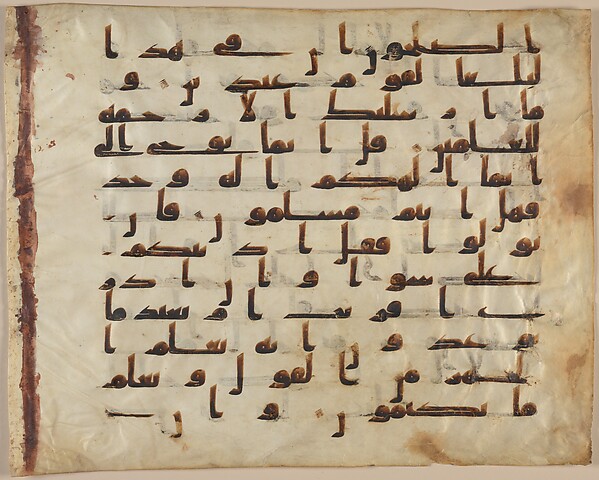
The strongest Muslim reply accepts the human work: God could preserve the Qur’an through careful people, consistent with Qur’an 15:9. Nothing in the collection process alone refutes that belief. But someone still asking whether the Qur’an is divine cannot use its promise as independent proof of the very authority being investigated. The historical question concerns what was transmitted; the theological question concerns why it should be received as God’s word. Keeping those questions separate avoids demanding that copying records settle both. The argument “it was preserved, therefore it is from God” leaves that second question unanswered. Its failure is a reason to examine the Christian account on its own evidence, not proof that every Islamic claim is false.
That distinction gives us a fair way to approach the New Testament. The fourth-century Codex Sinaiticus preserves its books centuries before Islam. In this manuscript Mark ends at 16:8, without the longer ending found in many Bibles, yet resurrection accounts remain in Matthew, Luke and John. The difference in Mark is real; it does not make every account about Jesus unavailable. We can therefore examine a pre-Islamic form of the Christian message without first claiming that every copy agrees. A Muslim critic can still ask whether alteration occurred before this witness; its age alone does not answer that objection or prove the resurrection and divine inspiration.
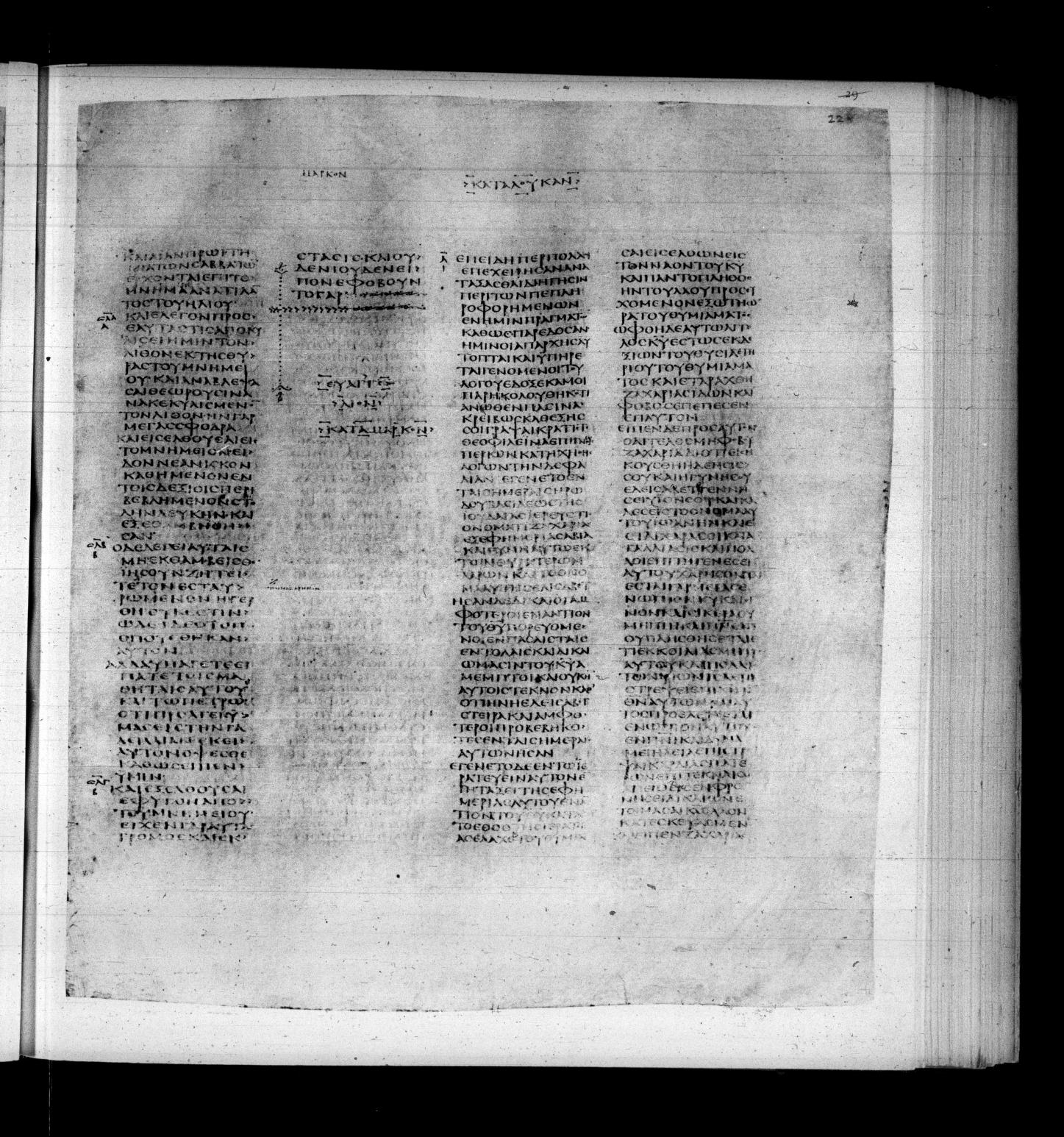
The useful next question is more precise than “Was it copied by people?” Ask what a particular witness preserves and what a particular difference changes. With Sinaiticus, the absence of Mark’s longer ending does not remove the other Gospels’ resurrection accounts. Those accounts remain available to read and assess on their historical and theological merits. Collection history does not settle their truth, but it gives us a reason to investigate the surviving Christian testimony rather than dismiss it before reading it. The choice between Islam’s claim to revelation and this Christian account must therefore turn on their reasons and testimony, not on a shortcut from collection history to divine authority.
Hugh Houghton, “What happened next? Stories of the resurrection” (2018) · University of Münster, Institute for New Testament Textual Research